

Dieu réprimandant Adam et Ève 1625
Collective Intelligence Precedes, Exceeds, and Succeeds Us
Collective intelligence precedes us: we have received our languages and our knowledge. Our skills and tools have been passed down to us. The ideals that drive us already mobilized previous generations. The landscapes and cities where we evolve were built by others. The libraries (physical or virtual) where we learn were written by countless authors who read each other. The essence of learning is to draw from collective memory, and at a time when digital sources are abundant, the role of teachers is more than ever to inspire thirst for knowledge.
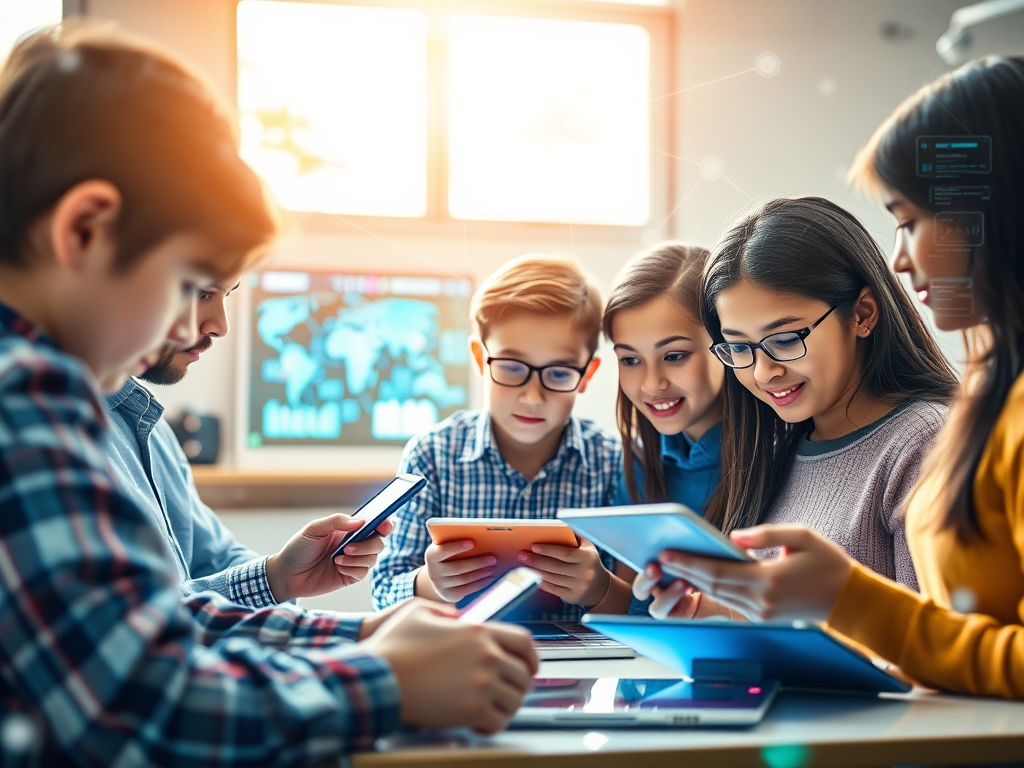
Collective intelligence exceeds us because each of us directly possesses only a tiny fraction of the knowledge, skills, and virtues (ways of being) that sustain the contemporary world. Hence the necessity of collaboration and openness to others that must be practiced and valued from the school learning phase onward. Moreover, learning is essentially a social enterprise. This is not only because the camaraderie of shared effort supports mutual aid and enthusiasm, but also because each person possesses an experience, an understanding, an original perspective that can illuminate others and shed light on their blind spots. Pedagogical dialogue must be not only vertical (teacher/student) but also horizontal (between students… and between teachers!). One can conceive of the teacher’s role as a facilitator of the collective intelligence of their students. I myself have used social media in class to stimulate collective learning. An enriching experience for everyone!
Collective intelligence succeeds us: after having (almost) received everything, it is our turn to transmit what our academic, professional, and existential journeys have taught us, adapting our knowledge to the varied needs and new circumstances of our interlocutors and collaborators. Besides, we never learn a subject as well as when we must teach it. Addressing others or depositing an element of expertise into collective memory forces us to clarify implicit concepts, to systematize empirical knowledge, to decontextualize the content of an experience. In doing so, we enable knowledge to circulate and allow our known or unknown recipients to appropriate it more easily. Yet another way to participate in collective intelligence.
Once the foundation of collective intelligence is laid, let us turn to artificial intelligence for learning. We must first properly characterize contemporary generative artificial intelligence (ChatGPT, Claude, Gemini, Grok, Perplexity, etc.). Rather than an « autonomous » mechanical intelligence, it is in reality a statistical compression of the immense digital memory that served its training. AI should be considered as a mobilization of collective memory for the benefit of its users. It is a manifestation of past and contemporary collective intelligence. In other words, AI is a digital interface between accumulated collective intelligence and living intelligence.
On a pedagogical level, I believe we must now include AI in our teaching scenarios – including at the level of evaluation. It has a role to play in the collective intelligence of the class group, in open dialogue with the teacher and students. AI can serve as an interlocutor in debates where students work in collaborative learning. It can help compile and structure ideas generated collectively, to organize individual contributions into a coherent document that the group critiques and improves together. AI should not replace human interactions; rather, it should be used as a catalyst to enrich collective reflection and deepen learning.
On the level of educational philosophy, it is essential never to neglect enriching students’ personal memories. Just because « everything » can be found on the internet does not mean we should stop cultivating our individual memory, which is the foundation of living thought. Critical thinking is indeed woven in a dialectic between collective memory (mobilized today by AI), each person’s personal memory, and open – contradictory and complicit – dialogue with our peers and contemporaries. The richer our personal memory and the better we can exploit AI’s resources, ask the right questions, identify hallucinations, and illuminate unspoken assumptions. In no way can AI substitute for reading « real » texts (whose authors are human) and even less for ignorance. But it can serve as an advisor and tireless coach for our learning. Ignorant, we will be manipulated and misled by language models. By contrast, the more learned we are, the better we can master an AI which, make no mistake, is becoming the technical environment of thought, the new sensorium.
 intlekt.io